Szia,
Remélem kellemesen telt a hétvégéd! Mi pihentünk, sőt, nálunk hosszú hétvége volt, így tegnap annyira el voltam tévedve, hogy nem is küldtem leckét:)
A héten vészhelyzetekkel fogunk foglalkozni, mert fontos, hogy ilyen eseteknél is helyt tudj állni angolul is.
Közeleg a karácsony, így már sokan elkezdték beszerezni az ajándékokat is. Én is hoztam neked most egy karácsonyi kuponkódot, amellyel 60% kedvezménnyel tudsz megvenni szinte minden videókurzust!
Nézd meg a tanfolyamokat, amikre érvényes ITT
Ha szeretnél átvenni velem élőben 14 ilyen szituációt (segítségkérés, véleménynyilvánítás, javaslattétel, bocsánatkérés, stb.), és megtanulni mindegyikre jó sok hasznos mondatot akkor januárban jön a 2026-év (valószínűleg egyetlen) ÉLŐ kurzusa, ha szeretnél velem tanulni 7 héten át, akkor erről bővebben ITT olvashatsz.
Ha pedig szeretnéd megszerezni az 5 Perc Angol Újrakezdőknek és Középhaladóknak utolsó megmaradt példányait (amelyet a LEVEL 2 tanfolyamon át is veszek veled videós formában kvízekkel, hangokkal, podcasttal), akkor most a könyv mellé megkapod a LEVEL 2 videókurzust is összesen 29,800 forint értékben, mindössze 9,900 forintos áron. Nézd meg ITT
Most pedig jöjjön a mai lecke!
Jó tanulást!
Üdv,
Nóri
MAI LECKE
EMERGENCIES
HALLGASD MEG A SZÖVEGET ÉS NÉZD MEG A SZÓSZEDETET: ITT
In case of an emergency or a crime people usually need outside help. There exist specific organisations whose task is to provide immediate and adequate professional help in cases like these, as soon as possible. An emergency is a dangerous, disastrous situation that requires urgent intervention, which is usually a quite complex task to perform. That’s why the police, the fire service and the ambulance service work non-stop and they are always on call. Most countries have an emergency telephone number which can be used to summon the emergency services to any incident. This number varies from country to country. It is usually an easy to remember short number such as 911 (United States and many parts of Canada), 999 (United Kingdom), 112 (Europe) and 000 (Australia). The majority of mobile phones dial the emergency services even if the phone keyboard is locked, or if the phone has an expired or missing SIM card so that everyone could get help when it’s needed. Calling for emergency is, of course, free of charge. Emergencies can be various.
The police deal with accidents, crimes and public security, that is the security of property and people. They should be contacted in case of a theft, a robbery or a road accident.
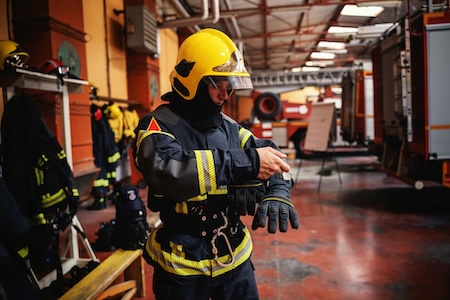
The fire service is responsible for taking care of fires and other dangerous situations, like, for example, when someone is stuck somewhere, and they help the police deal with road traffic collisions. They don’t only help people, animal rescue also belongs to them. So if your cat can’t come down from a tree and you cannot reach it, or you find a bird stuck somewhere you should call the fire brigade to solve the emergency.
The ambulance/paramedic service or Emergency Medical Service (in short EMS) attempts to reduce loss of life or damage to health. They are called in case of a sudden serious illness or an accident.
Sometimes the emergency situation is so complex that you cannot decide which service it concerns. That’s why it comes handy that there is a central phone number for all three emergency services with operators classifying cases and deciding on what kind of help to provide and which service to send.
The ambulance service and the fire service can be called on the phone only, while the police are available in the streets and at police stations, too, so contacting them is really easy, should you need them.