
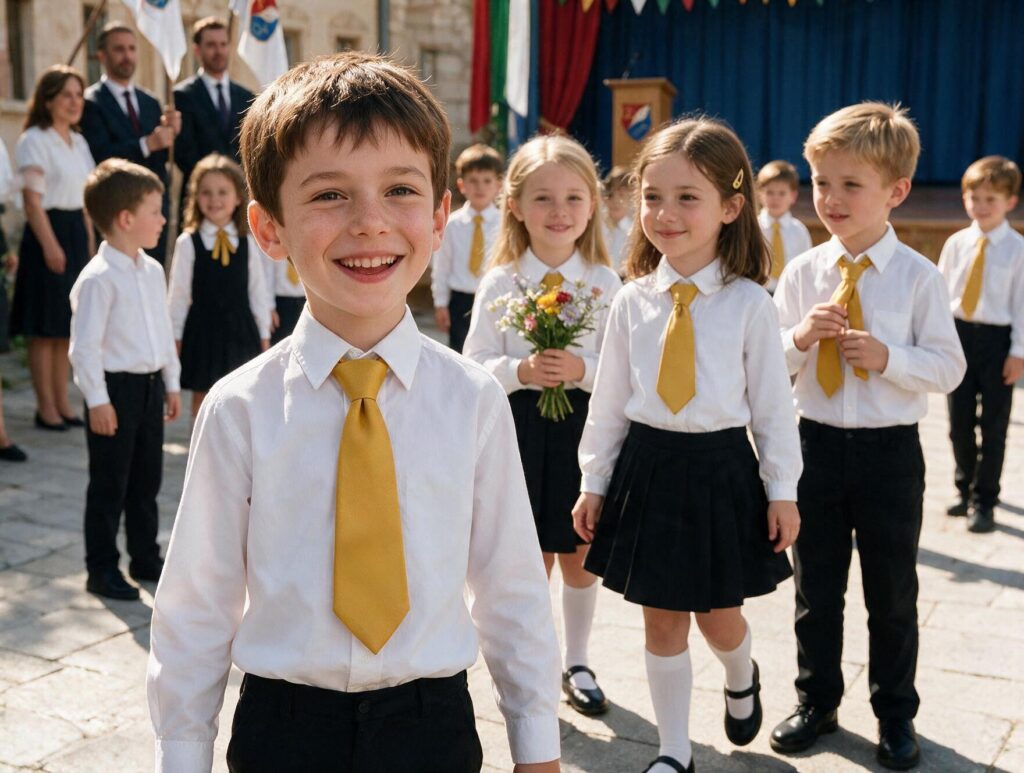
Hogyan mondják angolul, hogy “tanévnyitó”?

Bár más országokban nem szokás (legalábbis tudomásom szerint) a magyarhoz hasonló tanévnyitó ünnepség, azért tanuljunk meg egy kicsit beszélni róla angolul, hátha el kell magyarázni valakinek, hogy mi is ez.

The “évnyitó ünnepség” (School Year Opening Ceremony) in Hungary

In Hungary, the school year usually starts on September 1st (or the first Monday after that date). On this day, schools organize a special event called the “évnyitó ünnepség,” which means “opening ceremony” in English.
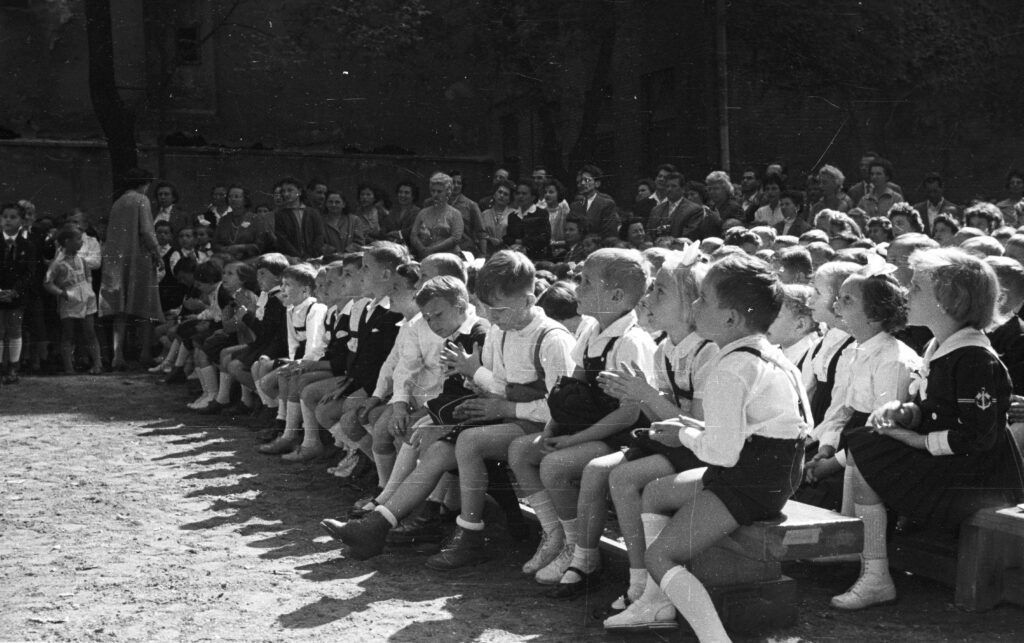
fotó: Fortepan

During this ceremony, students, teachers, and often parents gather in the schoolyard or in the gym. The principal (in Hungarian “igazgató”) usually gives a short speech to welcome everyone, especially the new first-year students. Sometimes older students perform a short program. They might sing, dance, or read a poem. It’s common for the youngest and oldest students to walk in together, which is a nice symbolic moment showing the beginning of a new school journey.

After the speeches, students go to their classrooms with their headmaster (also headteacher – in Hungarian “osztályfőnök”, where they get information about the new school year : timetables, books, and rules.

Is this common in other countries?

Yes, many countries have similar traditions, but they can look quite different:

  • Russia has a very similar and even more festive tradition called “Первый звонок” (First Bell). Students often bring flowers for their teachers, and first-graders ring a bell to mark the start of school.
  • Germany has a special tradition for first-graders called the “Schultüte”: a large paper cone filled with sweets and small gifts, given to children on their first day of school to make the day exciting.
  • The United States usually doesn’t have a formal ceremony. Students simply go to their classes on the first day, though some schools organize a welcome assembly.
  • Japan also has an opening ceremony (“始業式,” shigyōshiki), where the principal gives a speech and students sing the school song.

Iskolaigazgató = principal (American English) or headteacher (British English).

You’ll also often see the word headmaster (for a man) or headmistress (for a woman).  This is a more traditional/formal British term, often used for older or private schools.

Answer the questions:

1) What happens during the opening ceremony in Hungary?
2) Why do the youngest and oldest students walk in together?
3) What do students learn about when they go to their classrooms after the ceremony?
4) How is Russia’s first day of school tradition different from Hungary’s?
5) Why is the German “Schultüte” tradition special for young children?
Correct Answers:

1) Students, teachers, and parents gather together. The principal gives a speech, and older students sometimes sing, dance, or read a poem.
2) It is a symbolic moment that shows the start of a new school journey for everyone.
3) Students get information about their timetables, books, and school rules.
4) In Russia, students bring flowers for teachers and first-graders ring a bell. Hungary doesn’t have these traditions.
5) Children receive a large paper cone filled with sweets and small gifts, so the first day feels exciting.

Iratkozz fel ingyenes napi leckéimre!

Több mint 11.000 INGYENES nyelvlecke

Vocabulary

event esemény
to gather gyülekezni
schoolyard iskolaudvar
gym tornaterem
principal igazgató
to give a speech beszédet mondani
to perform fellépni / előadni
classroom osztályterem
timetable órarend
to ring the bell csengetni
to mark something megjelölni valamit
cone kúp
formal ceremony ünnepélyes szertartás
principal igazgató
headteacher igazgató
headmaster igazgató (férfi)
headmistress igazgatónő

Kapcsolódó anyagok