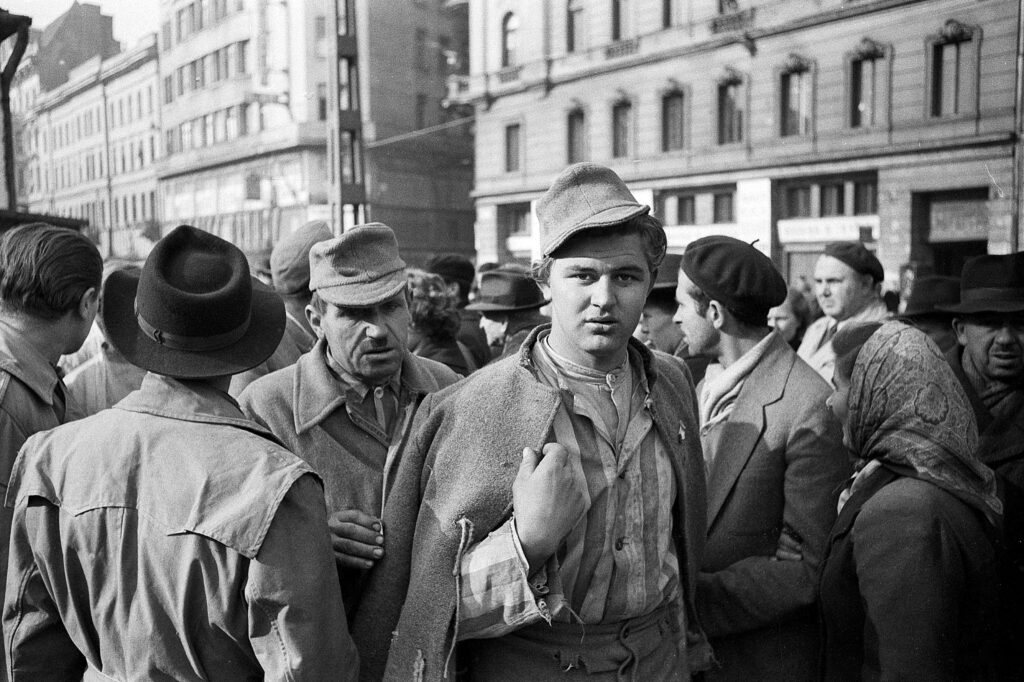
After the Second World War, Hungary came under Soviet control, and by 1949 the country was ruled by a strict communist regime. People lived in fear of the secret police, there was no freedom of speech, and the economy was in a very bad state.
On 23rd October 1956, university students in Budapest organised a peaceful demonstration. They had written a list of sixteen demands, including free elections, freedom of speech and the withdrawal of Soviet troops. The crowd grew quickly to hundreds of thousands. People gathered in front of the Parliament, and in the evening demonstrators pulled down the huge statue of Stalin in the city park. When the students tried to read out their demands on the radio, shots were fired at the Radio building, and the peaceful protest turned into an armed uprising.

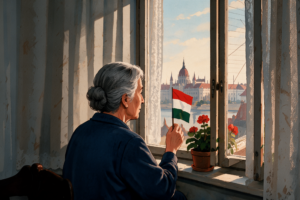
For a few days it seemed that the revolution had succeeded. Imre Nagy became Prime Minister, Soviet tanks left Budapest and people began to hope for a free and independent Hungary. Many people cut the communist coat of arms out of the middle of the Hungarian flag – the flag with a hole in it became the symbol of the revolution.
On 4th November, however, Soviet troops returned in huge numbers and crushed the revolution. Around 2,500 Hungarians were killed, and about 200,000 people fled the country. Imre Nagy and many others were later put on trial and executed.
For more than thirty years, people were not allowed to talk openly about 1956. Then, on 23rd October 1989, the Republic of Hungary was proclaimed, and today the date is a national holiday, when people commemorate the heroes and victims of the revolution.
| came under (to come under) | valaminek az uralma alá került |
| control | ellenőrzés, uralom |
| ruled (to rule) | kormányozták, uralták (kormányozni, uralkodni) |
| strict | szigorú |
| regime | rendszer, rezsim |
| in fear of | valamitől félve, rettegésben |
| secret police | titkosrendőrség (ÁVH) |
| freedom of speech | szólásszabadság |
| economy | gazdaság |
| peaceful demonstration | békés tüntetés |
| demands | követelések |
| free elections | szabad választások |
| withdrawal | kivonulás |
| troops | csapatok |
| crowd | tömeg |
| grew (to grow) | (meg)nőtt (nőni, gyarapodni) |
| gathered (to gather) | összegyűltek (összegyűlni) |
| demonstrators | tüntetők |
| pulled down (to pull down) | ledöntötték (ledönteni) |
| statue | szobor |
| read out (to read out) | felolvasni |
| shots were fired | lövések dördültek, tüzet nyitottak |
| protest | tüntetés, tiltakozás |
| armed uprising | fegyveres felkelés |
| revolution | forradalom |
| succeeded (to succeed) | sikerrel járt (sikerrel járni, győzni) |
| Prime Minister | miniszterelnök |
| tanks | tankok, harckocsik |
| independent | független |
| coat of arms | címer |
| flag | zászló |
| symbol | jelkép, szimbólum |
| in huge numbers | nagy számban, hatalmas erőkkel |
| crushed (to crush) | leverték (leverni) |
| fled (to flee) | elmenekült (elmenekülni) |
| put on trial (to be put on trial) | bíróság elé állították |
| executed (to execute) | kivégezték (kivégezni) |
| not allowed to | nem volt szabad, nem engedték |
| openly | nyíltan |
| proclaimed (to proclaim) | kikiáltották (kikiáltani) |
| national holiday | nemzeti ünnep |
| commemorate | megemlékezni |
| heroes | hősök |
| victims | áldozatok |