
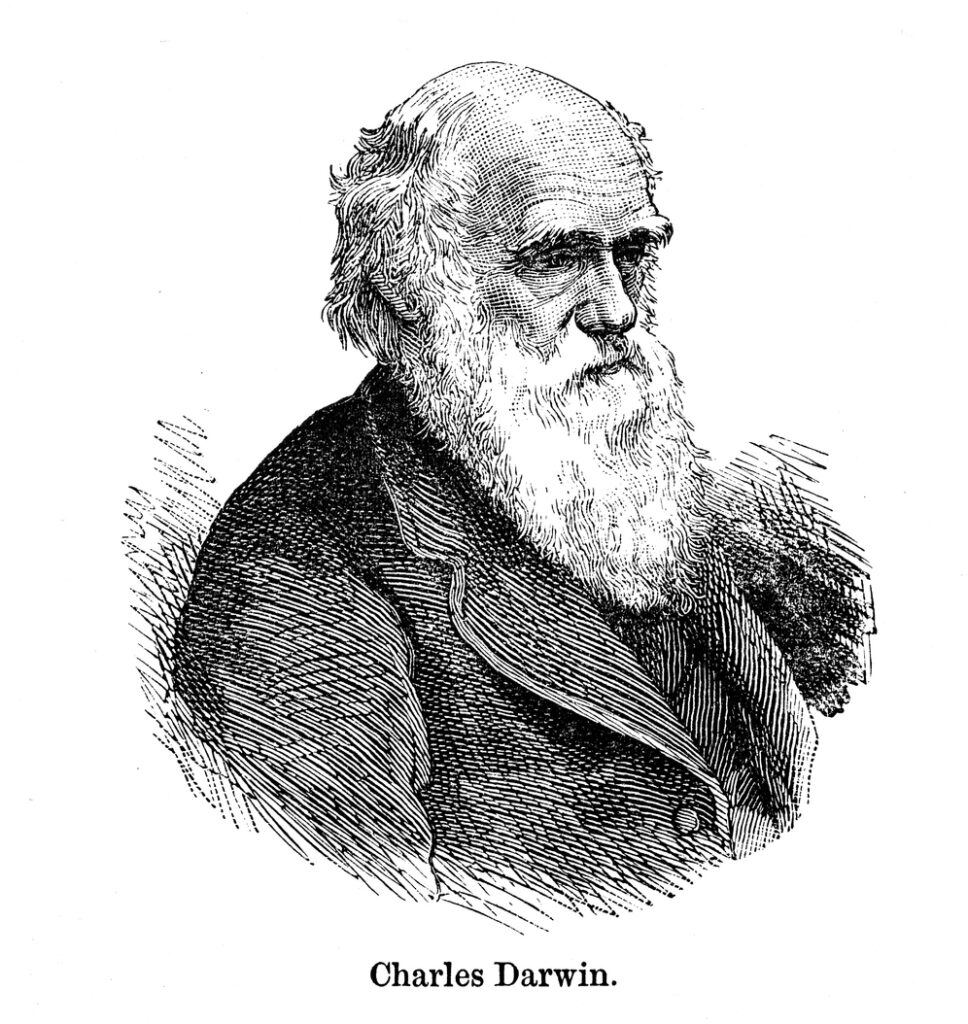
Charles Darwin was a pioneering thinker whose work in natural science changed how we understand the world. Born in 1809 in England, Darwin had a curious nature from a young age. He spent much of his time collecting insects and studying plants. His enthusiasm for the natural world grew further when he attended the University of Cambridge.
In 1831, Darwin joined a voyage on the HMS Beagle, which lasted almost five years. This opportunity allowed him to explore different parts of the globe, from the coasts of South America to the islands of the Pacific. During this journey, Darwin collected numerous specimens of plants, animals, and fossils. These diverse samples provided the foundation for his future theories.
One of Darwin’s most significant contributions is his theory of evolution by natural selection. In 1859, he published “On the Origin of Species,” where he argued that species evolve over time. His idea was that organisms best adapted to their environments are more likely to survive and reproduce. This process, which he called natural selection, leads to the gradual evolution of species.
At first, Darwin’s ideas faced skepticism and resistance from some religious and scientific communities. However, over time, his theories gained widespread acceptance and dramatically changed biology, providing a scientific explanation for the diversity of life on Earth. His work laid the groundwork for modern evolutionary biology.
Darwin’s achievements extended beyond his scientific theories. He inspired generations of scientists to pursue their own paths of discovery. His careful observations and willingness to question existing beliefs demonstrate the power of curiosity and critical thinking. Today, Charles Darwin is remembered as a key figure in the history of science, whose vision continues to influence our understanding of life.