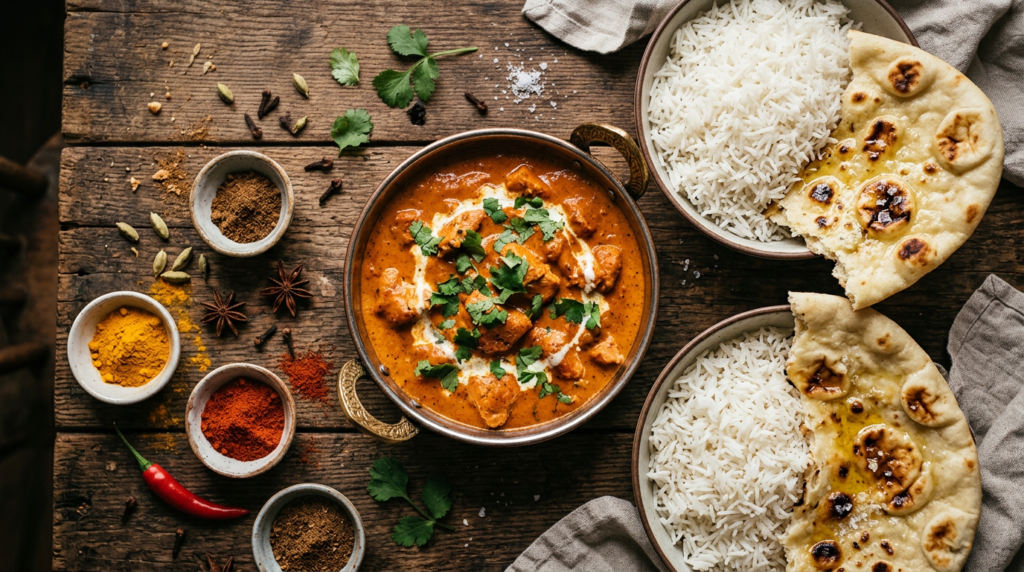
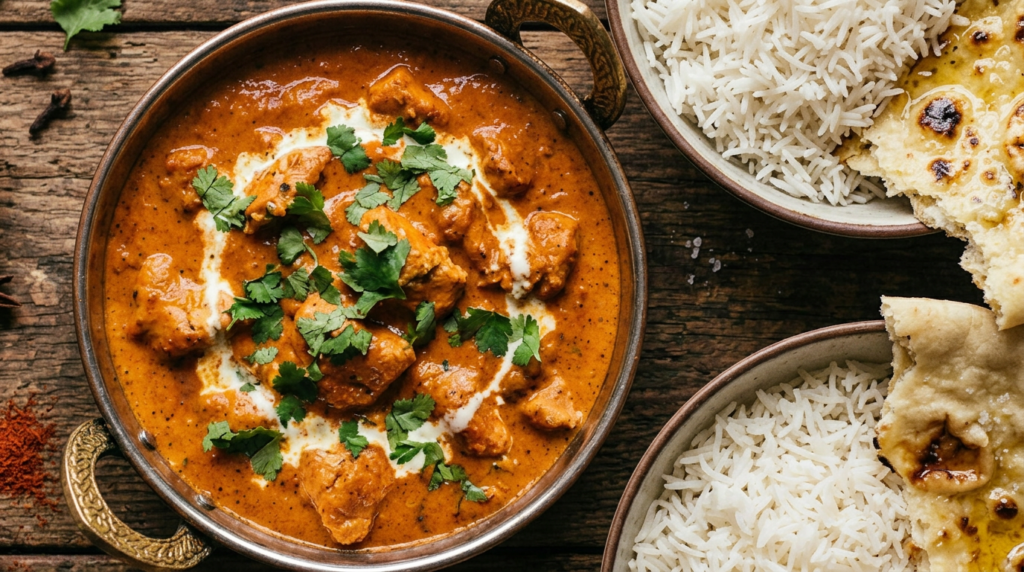
Kérdezz meg egy britet a kedvenc ételéről, és jó eséllyel nem a fish and chipset vagy a Sunday Roast-ot fogja mondani, hanem a curryt. A curry Nagy-Britannia egyik legnépszerűbb étele, egy bizonyos fajtáját, a chicken tikka masalát pedig gyakran az ország nemzeti ételének is nevezik.
A „curry” nem egy konkrét étel, hanem gyűjtőnév. A britek minden fűszeres, szószos indiai (dél-ázsiai) ételt curry-nek hívnak. A szó valószínűleg a tamil kari (szósz, fűszeres feltét) szóból jön, amit a gyarmati korban a portugálok és az angolok vettek át.
A chicken tikka maga még nem curry: a tikka kis darabokat jelent, ez joghurtos-fűszeres pácban, tandoori kemencében sült csirke, szósz nélkül. Attól lesz curry, hogy a masala (fűszerkeverék) szószt hozzáadják: paradicsomos, tejszínes, fűszeres mártásban tálalják. Így a chicken tikka masala = sült csirkefalatok curryszószban. A legenda szerint épp így született az 1970-es években Glasgow-ban: egy vendég száraznak találta a chicken tikkát, és szószt kért hozzá.
Why do the British love curry so much?
The story goes back hundreds of years. Britain ruled India for a long time, and many British people who lived there came home with a taste forspicy food. The first Indian restaurant in London opened as early as 1810.
The real curry boom, however, started after the Second World War. Many people from India, Pakistan and Bangladesh moved to Britain, and some of them opened small restaurants. These “curry houses” soon appeared in almost every town. Today there are thousands of them, and going out for a curry on a Friday night is a typical British tradition.
But why did curry become so popular? There are a few simple reasons:
It is full of flavour. Traditional British food was often quite plain, so spicy dishes felt exciting and new.
It is cheap and easy. A takeaway curry is a quick dinner after a long day at work.
It is social. People share several dishes at the table with friends or family.
It can be mild or hot. Everybody can find a curry they like, from creamy korma to very spicy vindaloo.
Chicken tikka masala is a great example of how British and South Asian food came together. Many people believe it was invented in the 1970s in Glasgow, Scotland. According to the popular story, a customer complained that his chicken tikka was too dry, so the chef quickly made a sauce from tomato soup, cream and spices. Nobody knows for sure if this story is true, but the dish became a huge hit. In 2001 the British Foreign Secretary, Robin Cook, even called it “a true British national dish”.
Would you like to try it at home? Here is an easy recipe for four people.
Ingredients
Serves 4 · Preparation: 20 minutes + at least 1 hour marinating · Cooking: 35 minutes
For the chicken tikka (marinade):
600 g chicken breast or thigh, cut into bite-sized pieces
150 g plain yoghurt
1 tablespoon lemon juice
2 cloves of garlic, crushed
1 thumb-sized piece of fresh ginger, grated
1 teaspoon garam masala
1 teaspoon ground cumin
1 teaspoon paprika (or chilli powder if you like it hot)
½ teaspoon salt
For the masala sauce:
2 tablespoons vegetable oil or butter
1 large onion, finely chopped
2 cloves of garlic, crushed
1 thumb-sized piece of fresh ginger, grated
1 fresh green chilli, finely chopped (optional)
2 teaspoons garam masala
1 teaspoon ground cumin
1 teaspoon ground coriander
1 teaspoon turmeric
1 teaspoon paprika
400 g tinned chopped tomatoes (or passata)
150 ml single cream
1 teaspoon sugar
salt to taste
a handful of fresh coriander leaves, to serve
To serve: basmati rice and naan bread
Method
Marinate the chicken. Mix the yoghurt, lemon juice, garlic, ginger, spices and salt in a large bowl. Add the chicken pieces and stir well so that every piece is covered. Cover the bowl and leave it in the fridge for at least one hour. If you have time, leave it overnight: the meat will be softer and more flavourful.
Cook the chicken. Heat your grill or oven to the highest temperature. Put the chicken pieces on a baking tray and cook them for 10–12 minutes, turning them once, until they are slightly burnt at the edges. This gives the dish its typical smoky “tikka” taste. Set the chicken aside.
Start the sauce. Heat the oil or butter in a large pan over a medium heat. Add the onion and fry it gently for 8–10 minutes, until it is soft and golden. Be patient here, because the onion gives the sauce its sweetness.
Add the garlic, ginger and spices.Stir in the garlic, ginger and chilli and cook for one minute. Then add all the dry spices and cook for another minute, stirring all the time so that they do not burn.
Add the tomatoes.Pour in the chopped tomatoes and the sugar. Bring the sauce to the boil, then turn down the heat and let it simmer for about 10 minutes, until it becomes thick. For a smooth sauce, you can blend it with a hand blender.
Finish the curry. Stir in the cream and add the cooked chicken. Simmer for 5 more minutes until the chicken is hot. Taste the sauce and add more salt if needed.
Serve.Sprinkle the curry with fresh coriander and serve it with basmati rice and warm naan bread. Enjoy!
Tip: If the sauce is too spicy, add a little more cream or a spoonful of yoghurt. If it is too thick, add a few tablespoons of water.