Where does Halloween come from?
Halloween is celebrated on 31st October, the evening before All Saints’ Day. The name comes from All Hallows’ Eve – “hallow” is an old English word for “saint“. Its roots go back more than 2,000 years to an ancient Celtic festival called Samhain, which marked the end of the harvest and the beginning of the dark, cold winter.
The Celts believed that on this night the boundary between the world of the living and the world of the dead became thin, and the spirits of the dead could return to Earth. People lit bonfires and wore masks and costumes to ward off evil spirits.
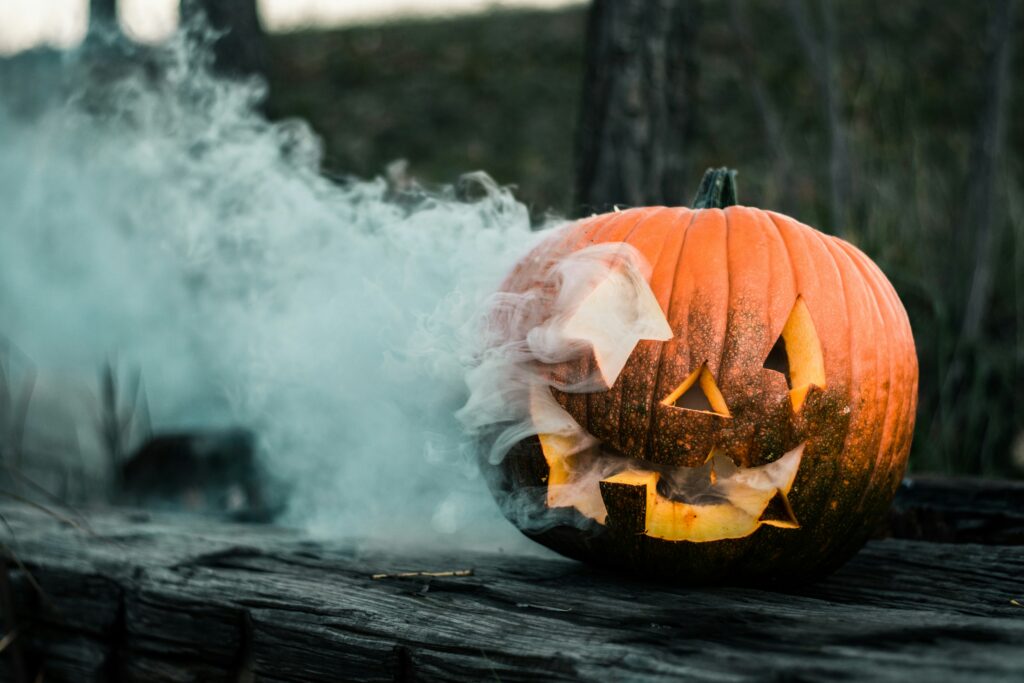
In the 19th century, Irish and Scottish immigrants took their Halloween traditions to America. Back home they had carved their lanterns out of turnips, but in America they found that pumpkins were bigger and much easier to carve. Today Halloween is hugely popular in the USA, where people spend billions of dollars on costumes, decorations and sweets every year – and it is becoming more and more popular in Hungary, too.
BASIC WORDS AND EXPRESSIONS
| pumpkin | tök, sütőtök |
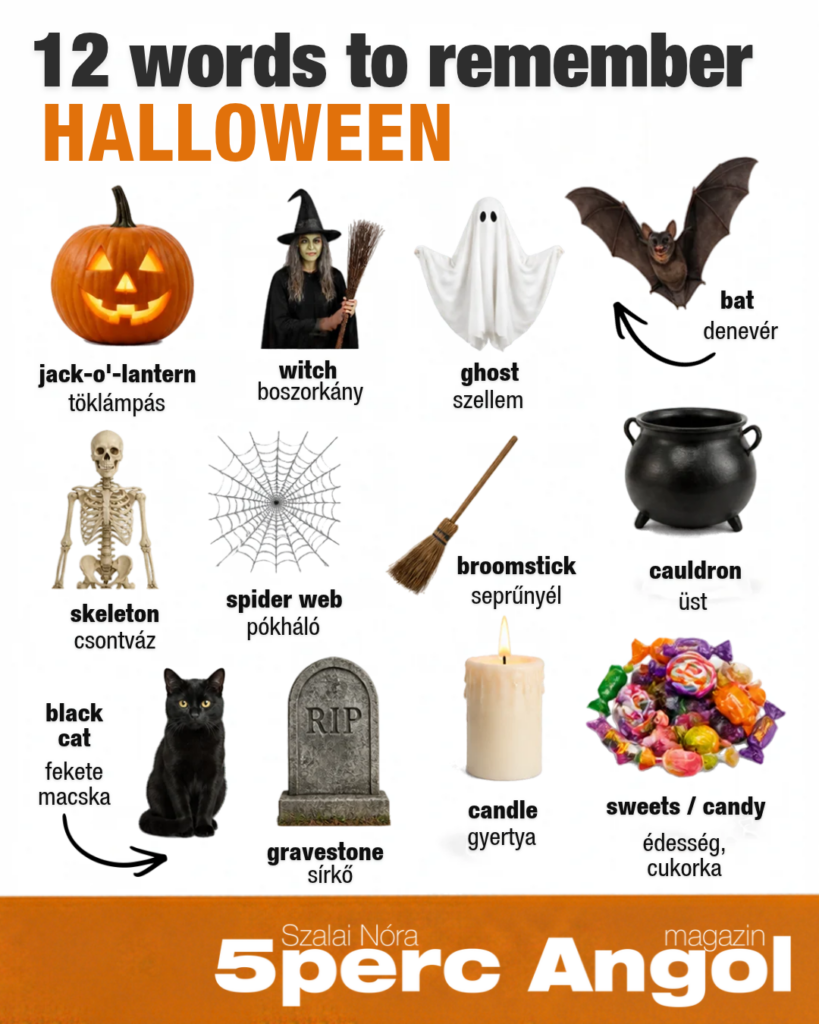
| jack-o’-lantern | töklámpás |
| to carve | (ki)faragni |
| costume | jelmez |
| to dress up (as) | beöltözni (valaminek) |
| trick-or-treating | házról házra járás édességért („csokit vagy csalunk”) |
| treat | finomság, édesség (jutalomként) |
| trick | csíny, tréfa |
| witch | boszorkány |
| broomstick | seprűnyél |
| cauldron | üst |
| ghost | szellem |
| haunted house | kísértetjárta ház |
| skeleton | csontváz |
| cobweb / spider web | pókháló |
| bat | denevér |
| graveyard / cemetery | temető |
| gravestone / tombstone | sírkő |
| werewolf | vérfarkas |
| full moon | telihold |
| candle | gyertya |
| spooky | kísérteties, hátborzongató |
| creepy | hátborzongató, ijesztő |
| scary | ijesztő |