Az 5 Perc Angol magazin 2025. februári számában részletesen olvashatsz az angol teázási szokásokról!
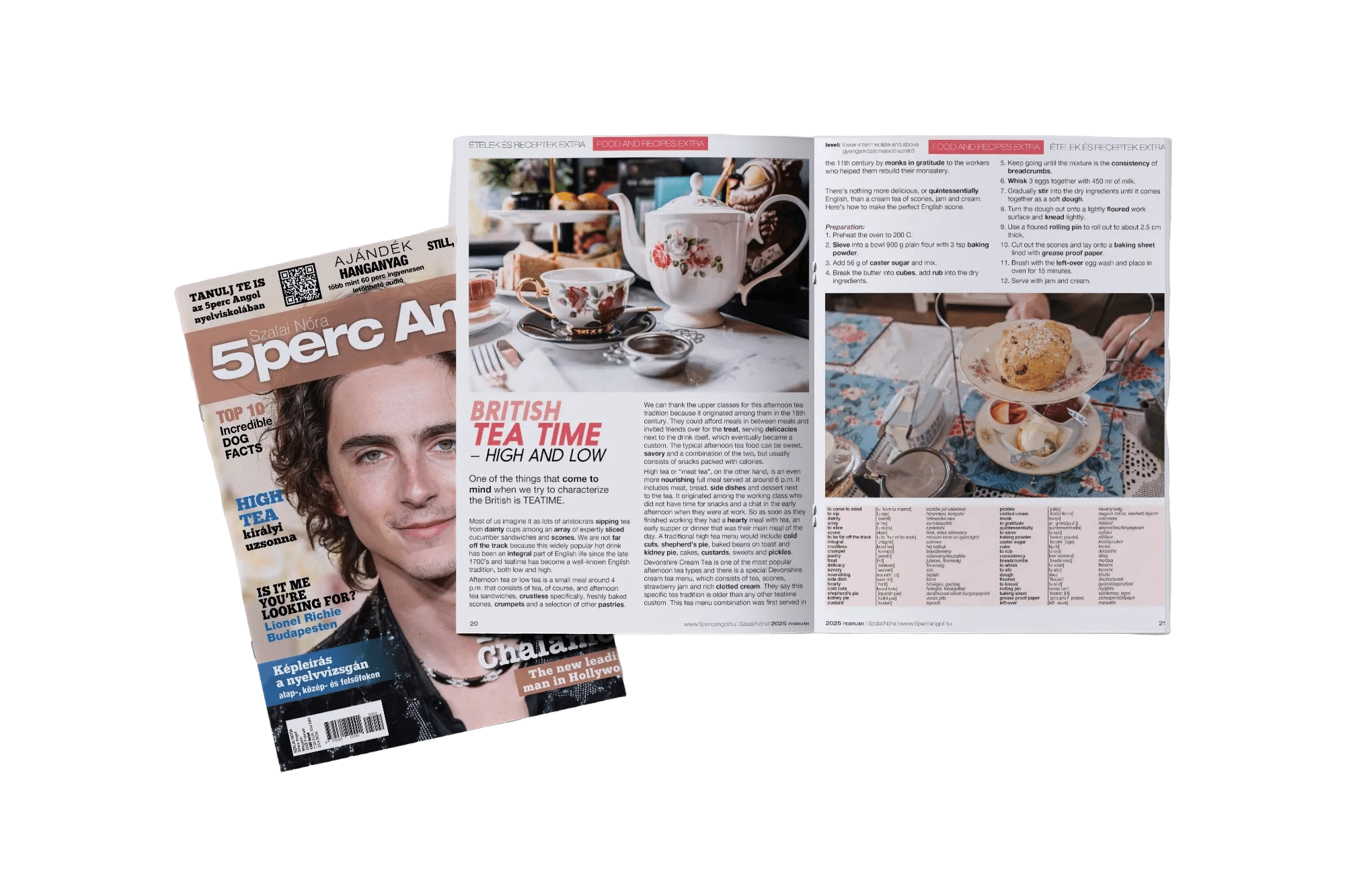

British Tea Time, High and Low
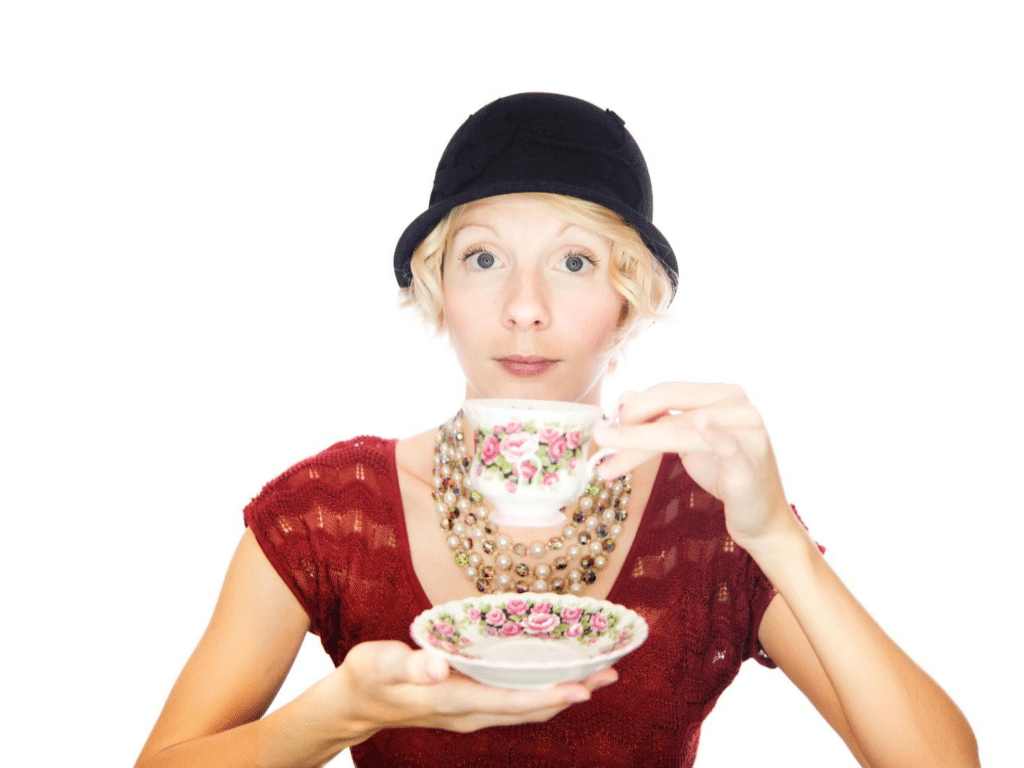
One of the things that come to mind when we try to characterize the British is TEATIME.
Most of us imagine it as lots of aristocrats sipping tea from dainty cups among an array of expertly sliced cucumber sandwiches and scones. We are not far off the track because this widely popular hot drink has been an integral part of English life since the late 1700’s and teatime has become a well-known English tradition, both low and high.
Afternoon tea or low tea is a small meal around 4 p.m. that consists of tea, of course, and afternoon tea sandwiches, crustless specifically, freshly baked scones, crumpets and a selection of other pastries.
We can thank the upper classes for this afternoon tea tradition because it originated among them in the 18th century. They could afford meals in between meals and invited friends over for the treat, serving delicacies next to the drink itself, which eventually became a custom. The typical afternoon tea food can be sweet, savory and a combination of the two, but usually consists of snacks packed with calories.
High tea or “meat tea”, on the other hand, is an even more nourishing full meal served at around 6 p.m. It includes meat, bread, side dishes and dessert next to the tea. It originated among the working class who did not have time for snacks and a chat in the early afternoon when they were at work. So as soon as they finished working they had a hearty meal with tea, an early supper or dinner that was their main meal of the day. A traditional high tea menu would include cold cuts, shepherd’s pie, baked beans on toast and kidney pie, cakes, custards, sweets and pickles.
Devonshire Cream Tea is one of the most popular afternoon tea types and there is a special Devonshire cream tea menu, which consists of tea, scones, strawberry jam and rich clotted cream. They say this specific tea tradition is older than any other teatime custom. This tea menu combination was first served in the 11th century by monks in gratitude to the workers who helped them rebuild their monastery.
There’s nothing more delicious, or quintessentially English, than a cream tea of scones, jam and cream. Here’s how to make the perfect English scone.
Preparation:
Az 5 Perc Angol magazin 2025. februári számában részletesen olvashatsz az angol teázási szokásokról!