
HOW CHRISTIE WROTE
Agatha Christie always said that she had no ambition to be a writer although she made her debut in print at the age of eleven with a poem printed in a local London newspaper. 1. ________ .
By her late teens she had had several poems published in The Poetry Review and had written a number of short stories. 2. ________ .
Agatha Christie wrote about the world she knew and saw, drawing on the military gentlemen, lords and ladies, spinsters, widows and doctors of her family’s circle of friends and acquaintances. She was a natural observer and her descriptions of village politics, local rivalries and family jealousies are often painfully accurate. 3. ________
The most everyday events and casual observations could trigger the idea for a new plot. Her second book The Secret Adversary stemmed from a conversation overheard in a tea shop: “Two people were talking at a table nearby, discussing somebody called Jane Fish… That, I thought, would make a good beginning to a story — a name overheard at a tea shop — an unusual name, so that whoever heard it remembered it. A name like Jane Fish, or perhaps Jane Finn would be even better.”
And how were these ideas turned into novels? She made endless notes in dozens of notebooks, jotting down erratic ideas and potential plots and characters as they came to her “I usually have about half a dozen (notebooks) on hand and I used to make notes in them of ideas that struck me, or about some poison or drug, or a clever little bit of swindling that I had read about in the paper”.
She spent the majority of time with each book working out all the plot details and clues in her head or her notebooks before she actually started writing. Her son-in-law Anthony Hicks once said: 4. ________
As grandson Mathew Prichard explains, “she then used to dictate her stories into a machine called a Dictaphone and then a secretary typed this up into a typescript, which my grandmother would correct by hand. I think that, before the war, before Dictaphones were invented, she probably used to write the stories out in longhand and then somebody used to type them. 5. ________ . I think a book used to take her, in the 1950s, just a couple of months to write and then a month to revise before it was sent off to the publishers. Once the whole process of writing the book had finished then sometimes she used to read the stories to us after dinner, one chapter or two chapters at a time. 6.________ . Of course, apart from my family, there were usually some other guests here and reactions were very different. Only my mother always knew who the murderer was, the rest of us were sometimes successful and sometimes not. My grandfather was usually asleep for most of the time that these stories were read but the rest of us were usually very attentive. It was a lovely family occasion and then a couple of months later we would see these stories in the bookshops.”
source: How Christie Wrote, agathachristie.com
A következő opciókat használva egészítsd ki a szöveget. A 6 kiegészítendő helyre 8 opciót találsz, így két extra opció van.
keys/megoldások:
1. D.; 2. H.; 3. F.; 4. A.; 5. B.; 6. G.; extras: C. and E.
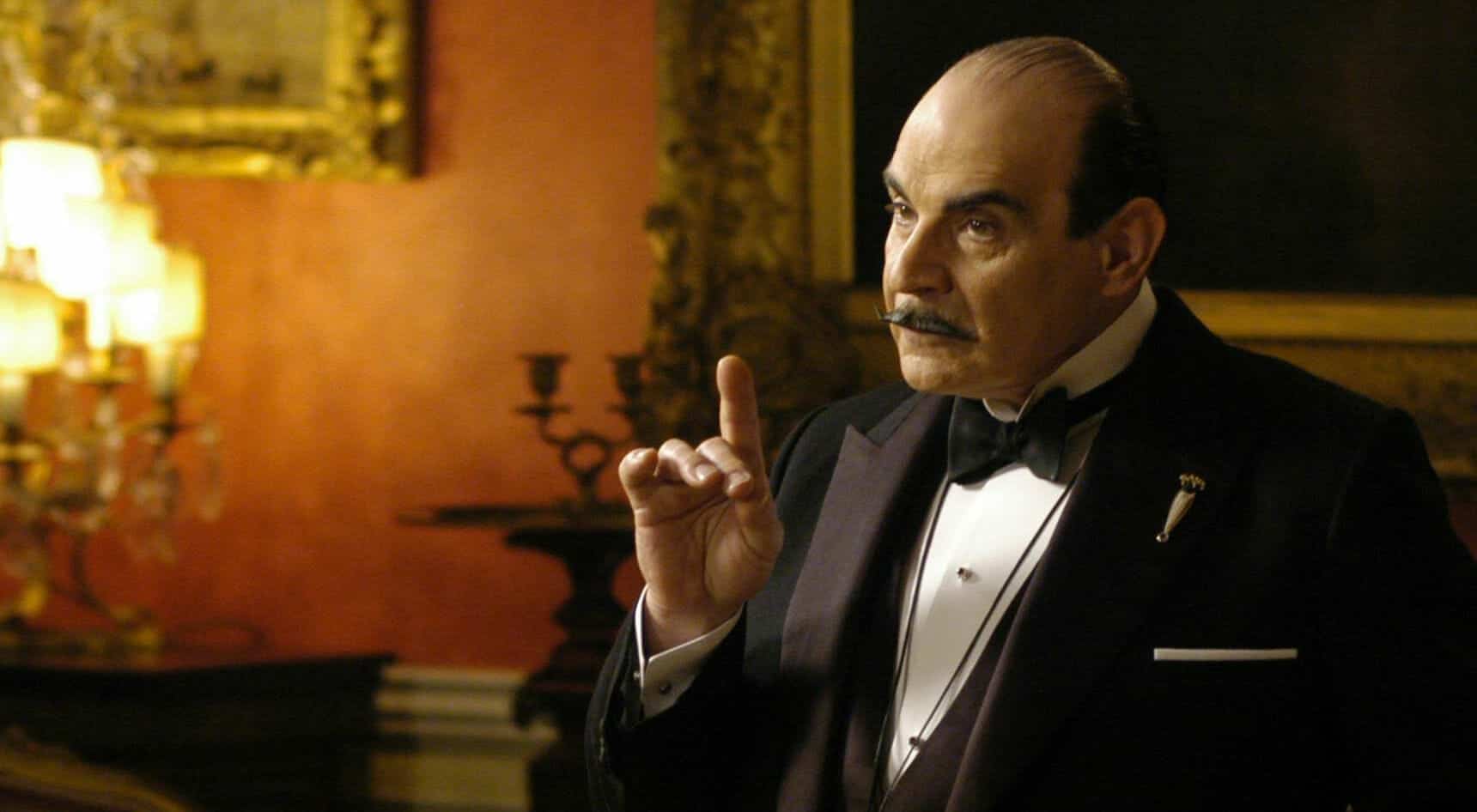
A következőkben 8 érdekes információt tudhatsz meg Hercule Poirot-ról.
source: https://www.agathachristie.com/characters/hercule-poirot/facts-about-hercule-poirot
A következő feladatban Poirot idézeteket olvashatsz, de az idézetek hiányosak. A megadott 3 opcióból döntsétek el, melyik egészíti ki a legjobban az idézetet.
source: https://www.agathachristie.com/news/2018/eight-quotes-from-hercule-poirot